
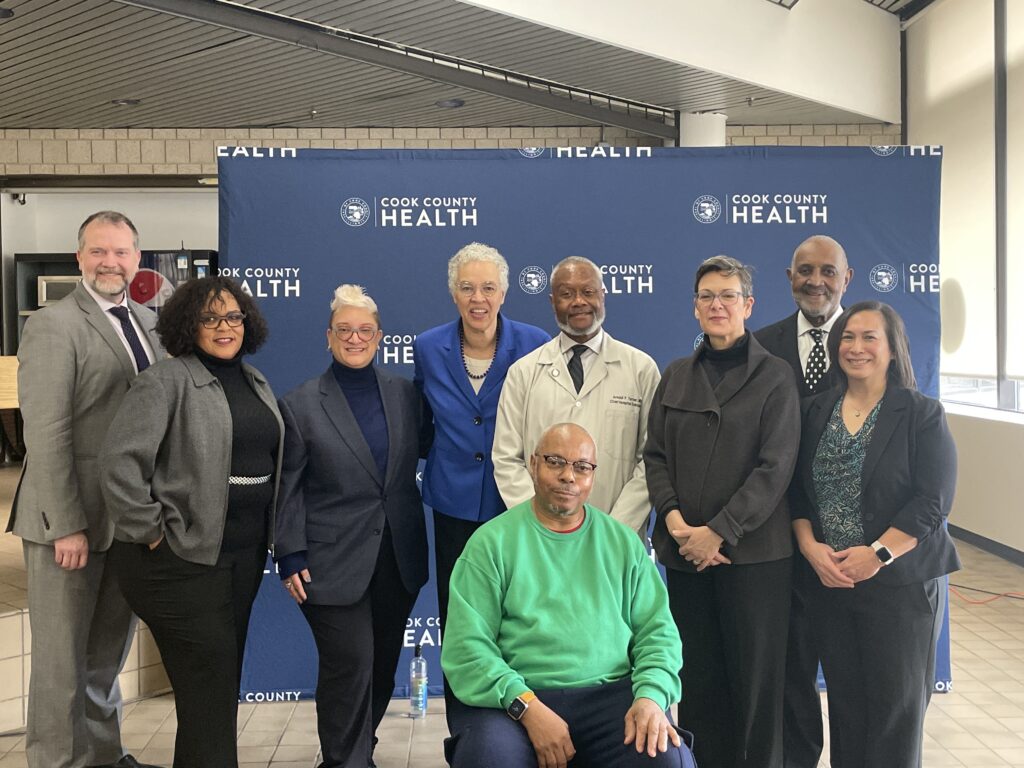
On January 21, leaders from the Illinois Department of Human Services, Cook County and the Greater Chicago Food Depository (GCFD) at Provident Hospital to sound the alarm on upcoming federal eligibility changes to the Supplemental Nutrition Assistance Program (SNAP). As federal cuts threaten to leave thousands of County residents hungry, Cook County Health (CCH) also unveiled new “Food as Medicine” initiatives designed to integrate nutrition directly into patient care.
Effective February 1, 2026, federal mandate now requires individuals aged 18 to 64 without dependents under 14 to work or volunteer at least 80 hours per month to maintain SNAP eligibility.
“No one should lose access to food because the rules are confusing or because they don’t know where to turn,” said Dulce M. Quintero, Secretary of the Illinois Department of Human Services. “That’s why Illinois is preparing and acting – by sharing clear information, offering tools to help people understand their options, and working with trusted community partners to reach those who may be impacted.”
“The federal cuts to SNAP eligibility are a step backward that ignores the realities of today’s economy,” said Cook County Board President Toni Preckwinkle. “As the cost of living has surged while job growth stalls, families are being squeezed even harder. When the federal government retreats from its responsibility, counties like ours step up, because access to nutritious food is a public good and a shared responsibility.”
Further, effective April 1, many immigrants under official humanitarian protections will lose SNAP eligibility entirely.
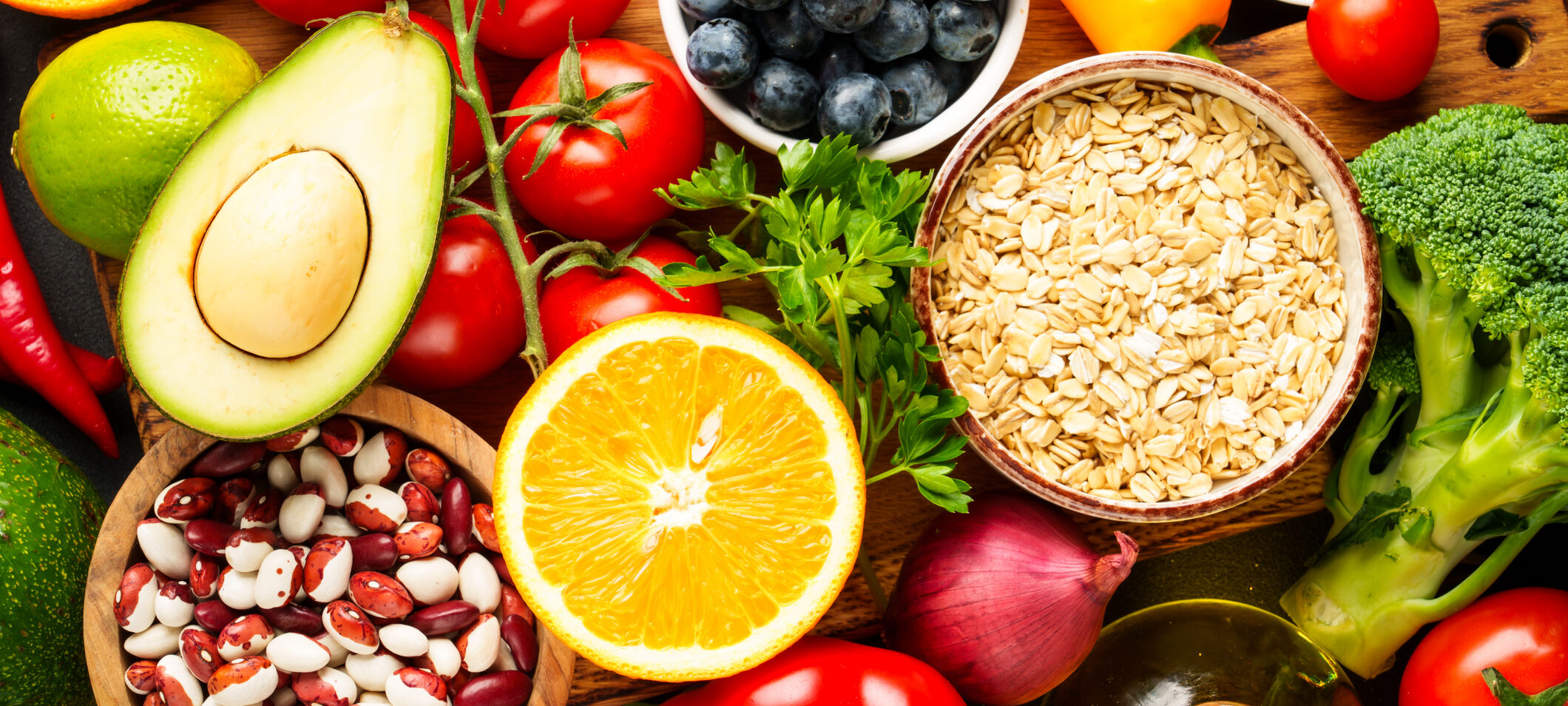
“Food is medicine—it nourishes our bodies, supports mental health, and helps prevent and manage chronic illnesses,” said Kate Maehr, Executive Director and CEO of the Greater Chicago Food Depository. “When people lose access to nutritious food, their health suffers. With the upcoming SNAP changes, food insecurity will soar: lines at our food pantries will get longer, parents will skip meals for their children, and seniors will forgo medication to afford groceries. The opening of Cook County Health’s two new food pantries is an essential step in ensuring vital nutrition for patients, and I am deeply grateful for their partnership.”
Cook County Health leaders emphasized that food insecurity is not just a social issue, but a critical health crisis.
“As a physician, I want to be very clear: hunger is a medical issue,” said Dr. Erik Mikaitis, CEO of Cook County Health. “Food insecurity is linked to higher rates of diabetes, heart disease, and kidney disease. The federal cuts to SNAP are coming at the same time we are seeing more people at risk of losing their medical coverage, creating a perfect storm. Hunger should never be a diagnosis, and food should never be a treatment that people cannot afford.”
In response to these upcoming challenges, Cook County Health is expanding its Food as Medicine program. Championed by the late Cook County Commissioner Dennis Deer, the initiative recognizes that preventing and managing illness starts with nutrition. The Greater Chicago Food Depository continues to serve as a critical partner in filling the gaps left by federal policy shifts.
Cook County Health’s new and expanded Food as Medicine initiatives include:
- On-Site Food Pantries: Foods pantries have been opened at Provident Hospital and Belmont Cragin Health Center provide CCH patients with fresh produce, dairy, and lean proteins.
- Public Education Campaign: A new campaign to equip residents with information on healthy food options and nutrition that features bilingual content, including videos featuring simple, low cost recipes.
- Medically Tailored Meals (MTM): Home-delivered meals customized for patients with chronic conditions, in partnership with the Greater Chicago Food Depository.
- Screening and Referrals: All CCH primary care sites now screen patients for food insecurity, providing immediate referrals to the GCFD SNAP Outreach Hotline.
“Our goal is to build sustainable, culturally appropriate food systems. By integrating healthy food into the clinical setting, we are providing our patients the tools to take control of their health,” said Shannon Andrews, CCH Chief Equity & Inclusion Officer. “Just as importantly, our public education campaign extends beyond the walls of Cook County Health, meeting people where they are with practical, low-cost nutrition guidance and information about affordable, healthy food options available in their communities.”
 Polski
  English
  Español
  العربية
  简体中文
简体中文